
Why Secret Santa Wishlists Prevent Bad Gifts
Discover why Secret Santa wishlists prevent bad gifts by ensuring thoughtful, recipient-approved choices that enhance gift-giving satisfaction.

Secret Santa wishlists are a proven system for preventing bad gifts by replacing guesswork with clear, recipient-approved preferences that guide even the most clueless gift-giver. The practice of sharing preferences before a gift exchange, sometimes called a gift registry or preference list, has measurable effects on satisfaction. Research shows 90% of gift satisfaction comes from receiving items explicitly requested on a wishlist. That single number explains why secret santa wishlists prevent bad gifts more reliably than any amount of good intentions. Platforms like Create-wishlist make this process easy to manage for groups of any size, turning what used to be a stressful guessing game into a genuinely enjoyable exchange.
How do Secret Santa wishlists reduce bad gift occurrences?
Bad gifts are almost always a communication failure, not a generosity failure. When a gift-giver has no information about the recipient, they default to generic choices: candles, mugs, gift cards to stores the recipient never visits. Wishlists short-circuit that pattern by providing specific, pre-approved options that match the recipient's actual taste and budget.
The mechanics are straightforward. A wishlist tells the giver exactly what the recipient wants, at what price, and in what style. This removes the two biggest sources of gift failure: irrelevance and price mismatch. Specific, modest gifts consistently outperform large, generic ones in Secret Santa contexts, which means a $25 item from a wishlist beats a $60 impulse buy almost every time.
Here is what wishlists do that gut instinct cannot:
-
Provide price-ranged options. A wishlist with items at $15, $30, and $50 lets the giver choose within their budget without awkwardness.
-
Signal personal style. A list that includes a specific book series, a preferred skincare brand, or a hobby-related item tells the giver far more than a conversation ever would.
-
Prevent duplicate purchases. When wishlists are managed through a platform with reservation features, two people cannot accidentally buy the same item.
-
Reduce selection panic. 40% of first-time Secret Santa participants experience genuine anxiety about gift selection. A wishlist with at least three items at varied price points effectively eliminates that panic.
Pro Tip: Require every participant to submit a minimum of three wishlist items with price points before the draw. This single rule cuts gift selection anxiety and dramatically improves the odds of a satisfying exchange.
The 90% satisfaction figure is not a coincidence. It reflects a basic truth about gift-giving: recipients know what they want better than anyone else does. Wishlists are simply the mechanism for sharing that knowledge.
What social dynamics do wishlists improve in group Secret Santa events?
Group gift exchanges carry social risks that solo gifting does not. When twelve coworkers exchange gifts in front of each other, a wildly off-budget or tone-deaf gift creates visible discomfort for everyone in the room. Wishlists act as social lubricants by preventing duplicate gifts and defusing the social hierarchy tension that anonymous exchanges can accidentally expose.

Consider the office scenario. Without wishlists, the junior employee who draws the department head faces an impossible calculation: spend too little and look cheap, spend too much and look like you are trying to impress. A wishlist with items at multiple price points removes that calculation entirely. The giver picks something from the list, stays within budget, and the recipient gets something they actually wanted.
Wishlists also normalize budget-aware gifting in a way that verbal communication rarely achieves. When everyone submits a list with items in the agreed spending range, there is no ambiguity about what is appropriate. This is especially useful in groups where participants do not know each other well, such as neighborhood exchanges or cross-department office events.
Pro Tip: Encourage participants to include a short note about what they do NOT want, such as food allergies, fragrance sensitivities, or categories they find unhelpful. This negative preference list is just as valuable as the positive one.
One underused tactic is the private gift approval system. Organizers who review gifts three days before the exchange can catch anything inappropriate, wildly off-budget, or likely to cause embarrassment, without exposing the buyer to public criticism. This works particularly well in professional settings or groups with mixed age ranges.
How to create effective Secret Santa wishlists
A wishlist that just says "books" or "something cozy" is almost as unhelpful as no list at all. Effective wishlists balance specificity with flexibility, giving the giver enough direction to feel confident without locking them into a single item they may not be able to find or afford.
Follow these steps to build a wishlist that actually works:
-
Start with a price range spread. Include at least one item under the group's spending limit, one at the limit, and one slightly above it. The giver then has a clear target and a stretch option. Varied price points and gift types, including experiences and consumables, give givers the most flexibility.
-
Be specific about brands and styles. "A notebook" is vague. "A Leuchtturm1917 dotted journal in navy" is a gift that will be used and remembered. Specificity is a kindness to the giver, not a demand.
-
Include at least one experience or consumable. A favorite coffee subscription, a streaming service month, or a local restaurant gift card are easy to purchase, impossible to get wrong, and always appreciated. Thoughtful gifts that reflect known needs consistently rank higher in recipient happiness than expensive surprises.
-
Add a brief personal note. Two sentences about your current interests or hobbies give the giver context. If you recently started rock climbing or are obsessed with a particular podcast, say so. This turns a list into a conversation.
-
Use an online tool to manage the list. Platforms like Create-wishlist allow you to add items from any store, set privacy controls, and let givers reserve items anonymously. This prevents duplicates and keeps the surprise intact.
-
Update the list before the draw. A wishlist from October that still includes a book you already bought yourself is a liability. Refresh it within a week of the exchange date.
The goal is a list that gives the giver three to five genuinely good options and the confidence to pick one without second-guessing themselves.
Comparing gift satisfaction: wishlists versus traditional exchanges
The difference in outcomes between wishlist-guided exchanges and traditional no-list Secret Santa events is not subtle. Here is how the two approaches compare across the metrics that matter most to organizers and participants:
| Factor | With a wishlist | Without a wishlist |
| --- | --- | --- |
| Gift satisfaction rate | Up to 90% | Significantly lower; dependent on giver's knowledge of recipient |
| Giver anxiety | Reduced; clear options provided | High; especially for first-time participants |
| Duplicate gift risk | Near zero with reservation features | Common in groups of 10 or more |
| Budget adherence | High; price-ranged items guide spending | Variable; givers often over or underspend |
| Handling unwanted gifts | Rare; recipients pre-approved all options | Frequent; generic gifts often go unused |
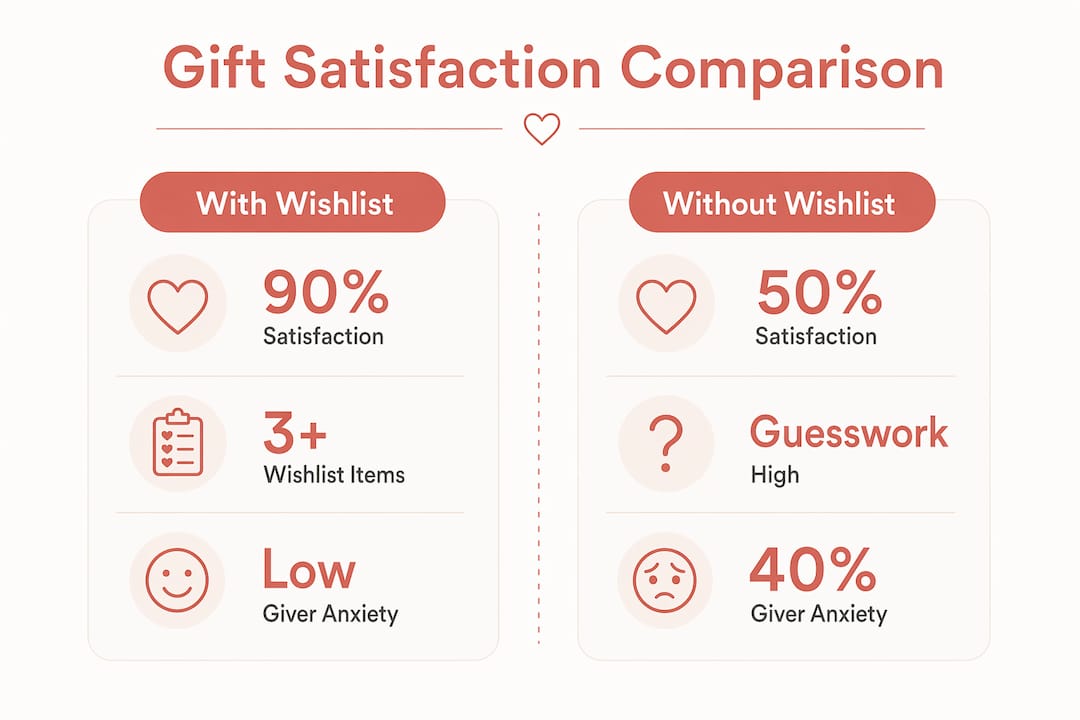
The no-list scenario produces a predictable set of mistakes. Givers default to safe but impersonal choices. Recipients receive items they will never use. The exchange becomes a performance of gratitude rather than a genuine moment of connection. A wishlist bridges the communication gap between what a recipient needs and what a giver can realistically provide.
The data on giver anxiety is particularly telling. When 40% of participants feel anxious about their gift choice, the exchange has already failed before anyone opens a package. That anxiety produces rushed, generic purchases, which is exactly the outcome everyone was trying to avoid.
Pro Tip: For groups with a history of gift exchange problems, implement a private approval step. Ask participants to send a photo of their wrapped gift to the organizer three days before the event. This catches problems quietly and protects everyone's experience.
Key takeaways
Secret Santa wishlists prevent bad gifts because they replace guesswork with recipient-approved preferences, producing measurably higher satisfaction, lower anxiety, and fewer unwanted gifts across every type of exchange.
| Point | Details |
| --- | --- |
| Wishlists drive satisfaction | 90% of gift satisfaction comes from receiving items explicitly listed on a wishlist. |
| Three items is the minimum | Requiring at least three price-ranged items eliminates selection panic for first-time participants. |
| Social dynamics improve | Wishlists prevent duplicate gifts and remove budget-related tension in group exchanges. |
| Specificity beats vagueness | Named brands, styles, and interests give givers confidence and produce better outcomes than general categories. |
| Online tools prevent duplicates | Platforms with reservation features stop two people from buying the same item without revealing who bought what. |
Why wishlists changed how I think about gift exchanges
I used to believe that a "good" gift required some element of surprise, that a wishlist was a shortcut for people who lacked imagination. That view did not survive contact with reality. After organizing and participating in more Secret Santa exchanges than I can count, the pattern is unmistakable: the exchanges people remember fondly are almost always the ones where everyone knew what to buy.
The surprise is not gone when you use a wishlist. The recipient still does not know which item from their list they will receive, or how the giver will present it. What disappears is the dread. The giver stops worrying about getting it wrong. The recipient stops bracing for something they will have to pretend to love. That shift in emotional energy is what makes the exchange actually fun.
Giving a wishlist is not entitlement. It is a practical act of generosity toward the person who drew your name. You are saving them time, money, and anxiety. The best exchanges I have seen are the ones where the organizer made wishlists mandatory, communicated the spending limit clearly, and used a platform to manage reservations. Every single one of those exchanges ended with people genuinely happy about what they received.
The organizer's role matters more than most people realize. When you set the structure, you set the tone. Require wishlists, set a clear budget, and use a tool that handles the logistics. The rest takes care of itself.
— Andrei
Start your Secret Santa wishlist today
Running a Secret Santa exchange without a structured wishlist system is the fastest way to end up with a room full of politely disguised disappointment. Create-wishlist gives organizers and participants a single place to build, share, and manage wishlists with anonymous gift reservations that keep the surprise alive while eliminating duplicates.
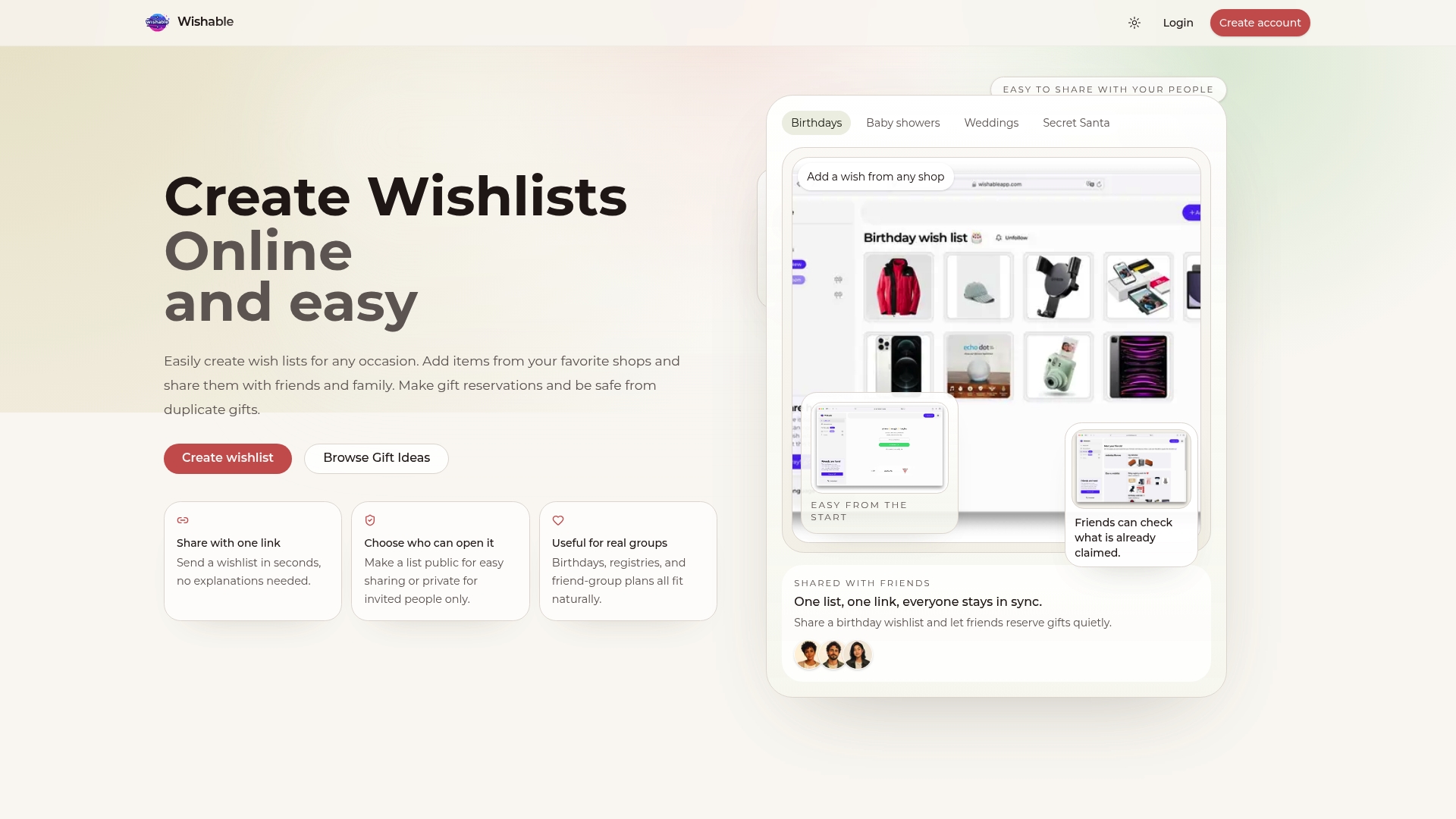
Every participant can add items from any store, set a preferred price range, and update their list right up to the draw date. Organizers get a clear view of who has submitted a list and who still needs a nudge. With over 5,500 users already using the platform for birthdays, weddings, and holiday exchanges, Create-wishlist is built for exactly the kind of group gifting situation where bad gifts happen most often. Set up your exchange at create-wishlist.com before your next event.
FAQ
Why do wishlists prevent bad gifts in Secret Santa?
Wishlists replace guesswork with recipient-approved options, and 90% of gift satisfaction comes from receiving items explicitly requested. Without a list, givers default to generic choices that rarely match the recipient's actual preferences.
What should you include in a Secret Santa wishlist?
Include at least three items at varied price points, specific brand or style preferences, and one consumable or experience option. A brief note about current interests helps givers choose with confidence.
How many items should a Secret Santa wishlist have?
A minimum of three items with clear price points is the baseline. This gives the giver enough options to stay within budget while still finding something the recipient genuinely wants.
Does using a wishlist ruin the surprise of Secret Santa?
No. The recipient still does not know which item they will receive or how it will be presented. Wishlists remove anxiety for the giver without eliminating the element of surprise for the recipient.
How do online wishlist tools help with Secret Santa exchanges?
Online wishlist platforms allow anonymous gift reservations, prevent duplicate purchases, and let participants add items from any store. Organizers can track submissions and send reminders without revealing who is buying for whom.
Recommended
Make your list easier to share
Collect wishes, keep gift ideas in one place, and help friends avoid duplicates.
Read next
More practical ideas for smoother gifting.

How to Set Up a Wishlist for Gifts You Chip In On With Friends or Coworkers
Plan a group birthday or anniversary present with a shared wishlist link, clear gift ideas, and a direct conversation about contributions.

What to Look for in a Wishlist App: The Features That Make Gift Planning Easier
Before choosing a gift wishlist app, consider who will use it, where you want to add items from, and whether your group needs to avoid duplicate gifts.

How to Share a Wishlist With One Link So Friends Can Open It Instantly
Learn how to share a wishlist with one link so friends can open it instantly, with privacy controls and gift reservations that help avoid duplicates.