
Private Wish Lists Explained: How Gift Reservations Prevent Duplicate Presents
Private wish lists make gifting calmer, more coordinated, and far less repetitive. This guide explains how gift reservations work, why they help avoid duplicate gifts, and how to use shared wishlist etiquette to keep surprises thoughtful without creating awkwardness.

Private Wish Lists Explained: How Gift Reservations Prevent Duplicate Presents
A private wish list is one of the simplest ways to make group gifting feel organized instead of chaotic. When people can see what has already been chosen, they can avoid duplicate gifts, coordinate better, and still keep the surprise intact for the recipient. That is exactly what gift reservations are designed to solve.
This guide explains how a private wish list works, why gift reservation features matter, and how to use them to avoid duplicate gifts while keeping good shared wishlist etiquette. If you are planning a birthday, wedding, baby shower, holiday exchange, or just a casual gift between friends, the same idea applies: everyone stays on the same page, and the recipient gets things they actually wanted.
What a private wish list actually is
A private wish list is a list of desired gifts that is not open to the public. Instead, it is shared only with specific people through a link or invitation. In many cases, the list owner can decide whether guests can view it, reserve an item, or see only the essentials.
The privacy part matters because it gives the list creator control. You can keep the list visible only to invited people, which is useful when:
On create-wishlist.com, this approach is built around the idea that gifting should feel lighter when everyone is on the same page. That means the useful details stay visible, while the awkward parts stay out of the way.
Why duplicate gifts happen so often
Duplicate gifts are not usually caused by bad planning. They happen because gifting often involves multiple people acting independently. One friend remembers a suggestion from last month. Another person asks a family member. A third buys something quickly because it seems like the safest option.
Without a shared system, everyone is guessing.
Here are the most common reasons duplicates happen:
- People want to keep the gift a surprise
Nobody wants to spoil the moment by asking too many questions. But when people stay silent, they often choose the same obvious item.
- Gift ideas are shared in too many places
A gift suggestion might appear in a text thread, a social post, a note app, or an old conversation. If there is no central list, it is easy to miss what has already been chosen.
- Not everyone is in the same group chat
In real life, gifting groups are messy. Family members, coworkers, and friends may each coordinate separately.
- People assume someone else will buy the “main” gift
This is a classic planning problem. Everyone thinks another person has it covered, or several people buy the same “safe” gift.
A private wish list with reservations solves these issues by giving the group one shared source of truth.
How gift reservations work
A gift reservation lets someone privately claim an item on the wish list so others know it is already being handled. Usually, the recipient does not see who reserved the gift, which helps keep the surprise intact.
In practical terms, the reservation process usually works like this:
This is simple, but powerful. It creates clarity without making the experience feel transactional.
The real benefit: fewer duplicates and less guessing
Gift reservations do more than prevent duplicate presents. They also reduce the social friction that can happen when people ask, “Did anyone already get this?”
That matters because gifting should feel thoughtful, not competitive.
Why private gift reservations are especially useful
Some wishlist tools are public-facing and great for inspiration, but they are not always enough for actual coordination. A private wish list with gift reservation features is especially useful when you want both visibility and discretion.
For birthdays and everyday wish lists
For birthdays, the stakes are simple: you want the right gift, not five versions of the same thing. Reservations let friends quietly coordinate without spoiling the mood.
For weddings and registries
Wedding registries often involve multiple guests shopping across different budgets. Reservations help guests choose confidently, especially when items vary from practical basics to bigger-ticket pieces.
For baby showers
Baby showers often include many guests buying essentials. A reservation system helps avoid a drawer full of duplicate blankets, bottles, or tiny outfits.
For holidays and Secret Santa
Holiday gifting often happens under time pressure. A shared wishlist with reservations keeps things moving quickly and avoids the “I bought the same thing as someone else” problem.
For friend-group plans
When several friends are pooling ideas for one person, reservations make group coordination much smoother. Everyone can see what has already been claimed without extra back-and-forth.
Shared wishlist etiquette: how to keep it thoughtful
A reservation feature works best when people use it with a little courtesy. The goal is not to turn gifting into logistics. It is to make the process easier and more considerate.
If you are creating the wishlist
Keep these etiquette tips in mind:
A good shared wishlist does not need to be long. It just needs to be helpful.
If you are shopping from someone else’s list
Follow these simple norms:
These habits keep the experience respectful for everyone involved.
How a private wish list helps different types of shoppers
A private wish list is useful not only for the recipient but also for the gift giver. People often assume the main advantage is convenience, but it also improves confidence.
For the giver
A reservation system helps shoppers feel sure they are buying something unique. It cuts down on second-guessing and helps them choose a gift that feels intentional.
For the recipient
The recipient gets items they actually wanted, without receiving five similar presents or awkward duplicates.
For the organizer
If one person is coordinating the event, the list becomes a lightweight planning tool. Instead of answering constant gift questions, they can simply share one link.
This is one reason modern wishlist tools are increasingly built around single-link sharing and private reservations rather than old-fashioned static lists.
Practical examples of how this works in real life
Here are a few realistic examples that show why private gift reservations matter.
Example 1: A birthday with close friends
Maya creates a private wish list for her birthday. She adds a few books, a new coffee mug, a pair of headphones, and one slightly bigger item.
Her friends open the list, see what is already reserved, and each choose something different. Maya still gets surprised, but nobody buys the same item twice.
Example 2: A baby shower with relatives and coworkers
The organizer shares a private list with a selected group. Some guests reserve practical essentials, while others choose decorative or personal gifts. Because the list is updated in real time, the final mix feels balanced instead of repetitive.
Example 3: A holiday exchange among siblings
The siblings agree to use one shared list. Each person reserves one item and keeps it private. That means nobody needs to ask follow-up questions, and the gifts still feel personal.
Example 4: A couple planning a wedding registry
The couple adds items from a few favorite stores. Guests can browse the list, reserve a gift, and pick something that fits their budget. The registry stays organized without becoming public beyond the intended invitees.
What makes this approach better than a simple notes app
A notes app can store ideas, but it cannot coordinate people very well.
A private wish list with reservations has several advantages over a basic list in your phone:
That difference matters because gifting is often a group activity, even when the actual present is just from one person.
How create-wishlist.com fits this use case
Create-wishlist.com is built for people who want wishlists to feel easy from the start. You can add items from familiar shops, keep a list private or share it with a single link, and use reservations to help friends coordinate quietly.
That makes it a strong fit for:
The platform’s focus is practical: keep the important details visible, let guests reserve gifts privately, and make sure everyone knows what is still available. In other words, it helps solve the exact coordination problem this article is about.
Frequently asked questions about private wish lists
Is a private wish list the same as a public registry?
Not exactly. A public registry is open for anyone to find, while a private wish list is shared only with selected people.
Can gift reservations stay hidden from the recipient?
That is the main advantage of a reservation system. The recipient can still enjoy the surprise while guests avoid duplicate gifts.
Do reservations make gifting less personal?
Usually the opposite. They make it easier to choose something meaningful because people can see what has already been claimed.
Is this only for formal occasions?
No. Private wish lists work just as well for casual birthdays, friend gifts, and everyday ideas as they do for weddings or baby showers.
Conclusion: the easiest way to avoid duplicate gifts
A private wish list is more than a convenience feature. It is a simple, respectful way to make group gifting clearer for everyone involved. With gift reservations, guests can coordinate quietly, avoid duplicate gifts, and still preserve the fun of giving.
If you want shared wishlist etiquette to feel natural instead of stressful, the formula is straightforward: one list, one link, private reservations, and fewer surprises of the wrong kind.
Next step
If you are planning a birthday, registry, holiday exchange, or friend-group gift, create a private wish list and share it with the people who need it. Start with a few meaningful items, keep reservations enabled, and let everyone contribute without overlap.
That small step can save a lot of awkwardness later.
This article was drafted with AI assistance and checked through automated source and evidence review before publication. Images are generated with AI.
Make your list easier to share
Collect wishes, keep gift ideas in one place, and help friends avoid duplicates.
Read next
More practical ideas for smoother gifting.

How to Make an Online Wish List for Birthdays, Weddings, and Everyday Use
Creating an online wish list is one of the simplest ways to organize gift ideas for birthdays, weddings, baby showers, holidays, and everyday use. With the right wish list app, you can collect items from favorite stores, share one link with friends and family, and avoid duplicate gifts with private reservations.

The Best Way to Build a Wishlist from Any Store: Add Items with One Link
A flexible wishlist should work with the stores you already love—not force you into one marketplace. Learn how to build a wishlist from any store, share it with one link, and keep gifts organized without duplicate purchases.
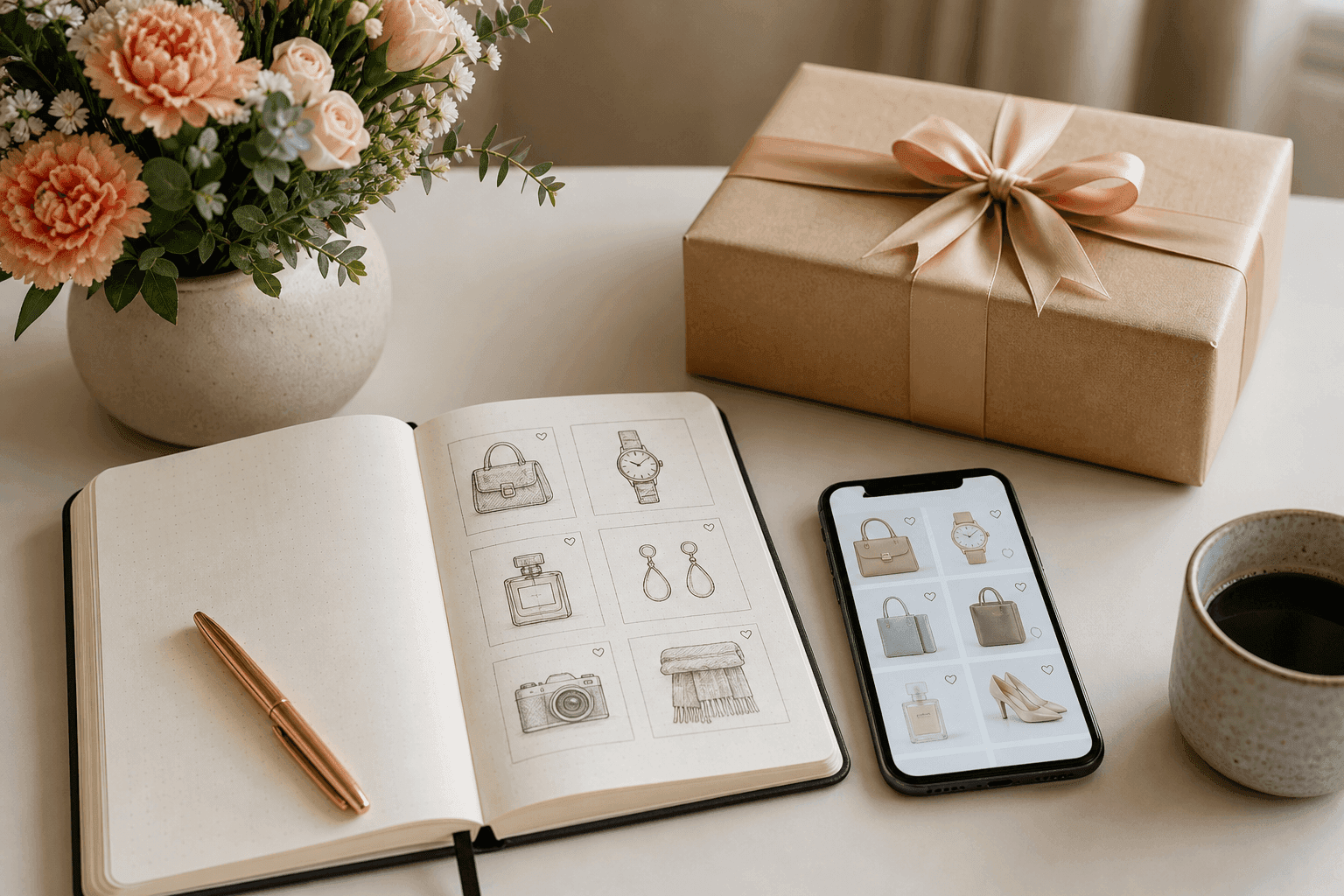
Birthday Wishlist Ideas That Make It Easy for Friends to Choose the Right Gift
A birthday wishlist can take the guesswork out of gifting, reduce duplicate presents, and make it easier for friends to choose something that feels thoughtful and useful. This guide shares practical birthday wishlist ideas, etiquette tips, and examples you can use to build a wish list for a birthday party that works for real people and real budgets.