
Wish List Maker That Keeps Gifting Easy
A wish list maker keeps gifts organized, shareable, and duplicate-free. See how it makes birthdays, holidays, and group gifting much easier.
You know the moment. Someone asks what you want for your birthday, the holidays are coming up fast, or a group chat starts trying to organize one gift for one person, and suddenly a simple idea turns into ten messages, three duplicate purchases, and at least one awkward "wait, who already bought that?" A good wish list maker fixes that before it starts.
The best part is that it does more than hold a list of products. It gives people one place to save ideas, one link to share, and one cleaner way to coordinate gifts without turning it into a project. For anyone who buys gifts regularly or gets asked for gift ideas more than once a year, that kind of simplicity matters.
What a wish list maker should actually do
Plenty of tools can store product names. That is the easy part. A useful wish list maker should make the entire gift-planning process feel lighter, not just more digital.
That means it should let you add items quickly, preferably from any store you already shop. It should be easy to share with friends, family, or a group without forcing everyone into the same retailer. And if other people are shopping from your list, it should help prevent duplicate gifts without spoiling surprises.
That last part is where a lot of basic lists fall short. A list that looks nice but does nothing to coordinate buyers still leaves room for confusion. If two cousins, two coworkers, or two friends can all see the same item and buy it at the same time, the list is only solving half the problem.
Why people use a wish list maker year-round
Most people do not think about wishlists as an everyday tool. They think about them when a birthday is close, when wedding planning starts, or when holiday shopping turns hectic. But a wish list maker becomes much more useful when it is part of your regular routine.
You see something you want in March, save it. Your child mentions a toy in July, add it before you forget. Your partner asks what you might want this year, and instead of scrambling for ideas on the spot, you already have a list that feels current and thoughtful.
This is especially helpful if your tastes change or if you prefer practical gifts. Instead of giving people vague answers like "anything is fine" or "I do not know," you can share a list that reflects what you would actually enjoy or use. That makes gifting easier for everyone involved.
It also helps with your own planning. A wishlist can double as a running reminder for future purchases, seasonal needs, and gift ideas for yourself that you are not quite ready to buy yet.
The difference between a registry and a flexible wish list maker
Traditional registries work for specific milestones. They are useful for weddings, baby showers, and a few formal life events. But they can feel rigid if your needs are more casual or spread across different occasions.
A flexible wish list maker is better suited to how most people actually give gifts now. Birthdays, Secret Santa exchanges, graduation gifts, housewarmings, family holidays, teacher appreciation, back-to-school needs, new pet shopping, and group gifts for coworkers do not always fit inside a registry format.
The other big difference is store choice. Registries often keep you inside one retailer or a small set of approved partners. That can be limiting if the item you want is from a small shop, a niche brand, or a retailer your friends already trust. A better option is a tool that works across stores, so your list reflects what you actually want instead of what happens to be available in one system.
That flexibility matters because real shopping is messy. People compare prices. They already have store preferences. Some want to buy from a major retailer. Others want to support a smaller business. A useful list should make that easier, not force everyone into one lane.
What makes sharing feel low-pressure
One reason people avoid making wishlists is that they worry it will feel demanding. Nobody wants to come across as too specific or too transactional, especially with friends and extended family.
A good wish list maker softens that. Instead of sending a long text with scattered ideas or answering the same "what do you want?" question over and over, you can share one simple list and let people browse privately. It feels less like making requests and more like giving helpful guidance.
That matters in social situations where tone can get weird fast. Group gifting gets easier when everyone can quietly coordinate. Family shopping gets easier when relatives in different places can use the same list. Even casual gift exchanges feel smoother when no one has to ask ten follow-up questions.
Privacy features also make a difference here. Some people want a fully shareable list. Others want more control over what gets seen and when. It depends on the occasion. For a child birthday list, broad sharing may make sense. For a personal wishlist you update all year, you may want more selective visibility.
A wish list maker is really a duplicate-gift problem solver
The most practical feature in any wish list maker is private reservation. It sounds small, but it changes the experience for both the person receiving gifts and the people buying them.
Without reservations, a list is basically a suggestion board. People can look at it, but they still have no clear signal about what someone else has already chosen. That creates the classic duplicate issue, especially around holidays and larger family events.
With private reservations, shoppers can mark an item as claimed without ruining the surprise for the recipient. That means the list stays useful right up until the event date. No awkward coordination, no public spoil alerts, and far less chance of opening two of the same thing.
This feature becomes even more valuable with group gifts. If several people want to chip in on one bigger item, they need a shared system that keeps the plan organized without requiring a full spreadsheet or a dedicated event app.
The best wish list maker should feel almost invisible
When a gifting tool is too complicated, people stop using it. That is true even if the feature list looks impressive. Most users are not looking for event-management software. They want something fast, clean, and easy enough to use in a browser while they are already shopping.
That is why lightweight design matters. If adding an item takes too many steps, it starts to feel like homework. If sharing the list is confusing, people go back to texting screenshots. If the interface feels formal or cluttered, casual occasions start to feel like work.
The best experience is the one that fades into the background. You paste a product link, organize your list, share one URL, and move on. No stress, no learning curve, no worries anymore.
That simplicity is also what makes a tool like Wishable useful across more than one event. It is not built just for one life milestone. It fits birthdays, holiday planning, baby showers, family lists, personal shopping reminders, and everyday gift coordination without making each one feel overly structured.
How to know if a wish list maker is right for you
If gifting in your life is occasional and very simple, almost any note-taking app might be enough. But if you regularly share ideas, shop across multiple stores, or coordinate with more than one person, a dedicated wish list maker starts paying off quickly.
It is especially helpful if you have ever dealt with duplicate gifts, forgotten gift ideas you meant to save, struggled to answer "what do you want?" on the spot, or tried to organize a shared purchase through a chaotic group chat. Those are all signs that the problem is not the people involved. It is the system.
A better system should not add friction. It should remove it. It should make gift planning feel clear, social in the right ways, and private in the ways that count.
The nicest thing about using a wishlist well is that it does not make gifting less thoughtful. It usually makes it more thoughtful, because people can choose from ideas you genuinely want instead of guessing and hoping for the best.
A good gift still feels personal. A good wish list maker just gives that thoughtfulness a cleaner place to land.
The next time someone asks what you want, or the next time you are trying to organize gifts without five side conversations, you do not need a bigger system. You probably just need an easier one.
Make your list easier to share
Collect wishes, keep gift ideas in one place, and help friends avoid duplicates.
Read next
More practical ideas for smoother gifting.

How to Set Up a Wishlist for Gifts You Chip In On With Friends or Coworkers
Plan a group birthday or anniversary present with a shared wishlist link, clear gift ideas, and a direct conversation about contributions.

What to Look for in a Wishlist App: The Features That Make Gift Planning Easier
Before choosing a gift wishlist app, consider who will use it, where you want to add items from, and whether your group needs to avoid duplicate gifts.
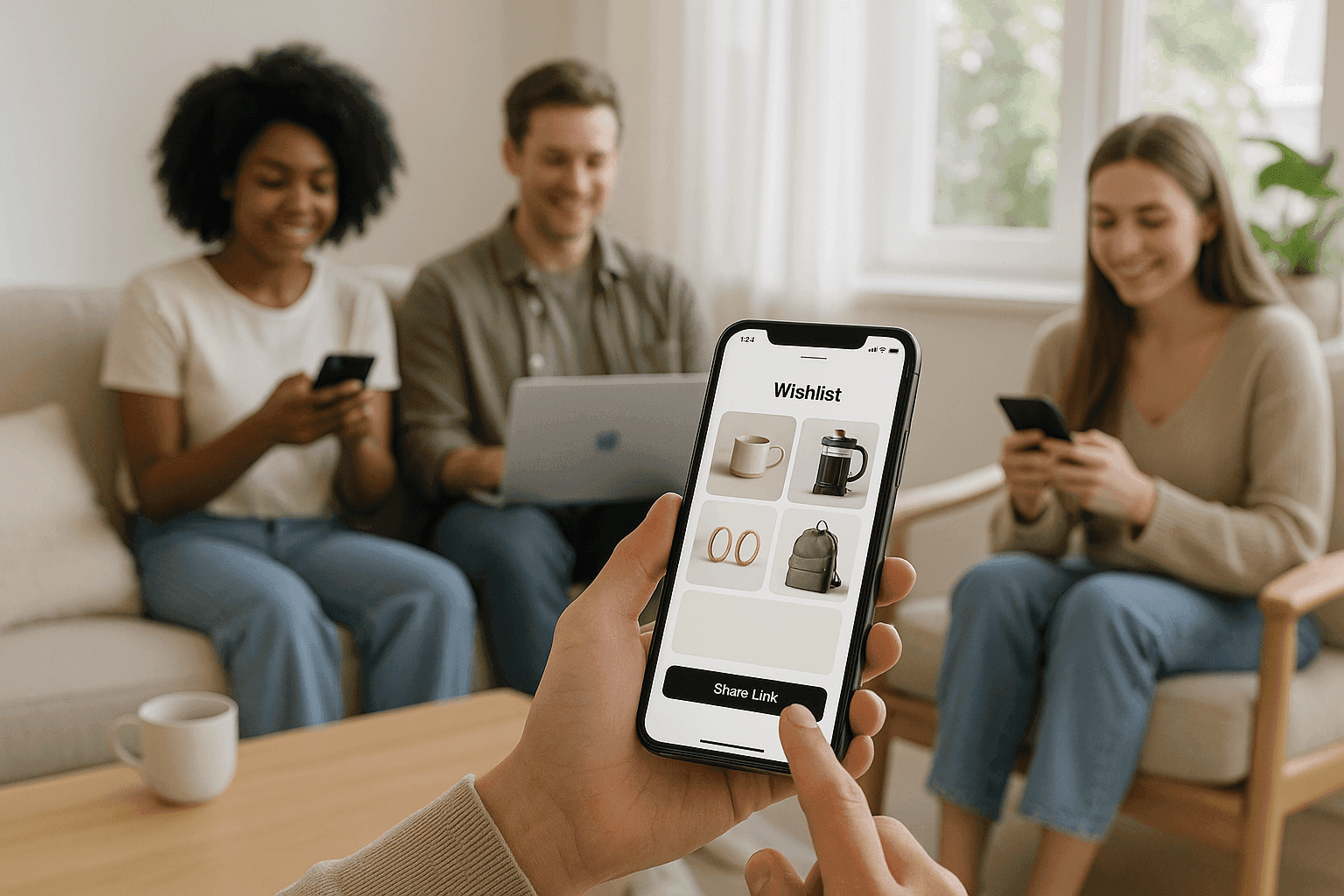
How to Share a Wishlist With One Link So Friends Can Open It Instantly
Learn how to share a wishlist with one link so friends can open it instantly, with privacy controls and gift reservations that help avoid duplicates.